Functional communication: helping your child ask instead of melt down
Here’s the sequence behind most meltdowns: a child needs something, has no reliable way to ask, and escalates until someone guesses. Functional communication training replaces the guessing. We figure out what your child is trying to say, then build them a faster, easier way to say it, in words, signs, pictures, or a device, whatever their body and brain can use today.
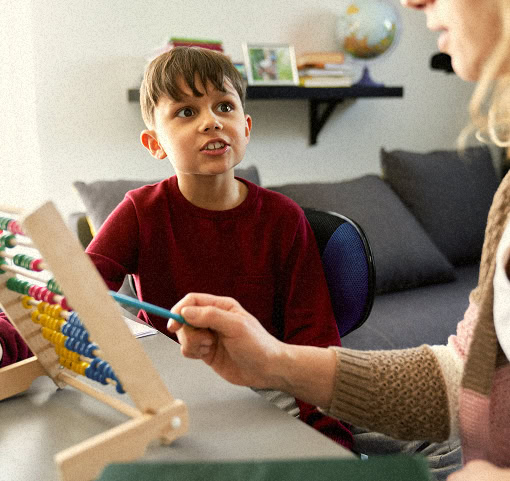


Services designed and led by Oak & Arrow’s Board Certified Behavior Analysts: Paige Tully, BCBA #1-20-44228, CT license BA.001021, and Tiffany Salvatore, BCBA #1-25-81796, CT license BA.001840. Both came to behavior analysis from the classroom.
The idea, in one story
A four-year-old screams every time the tablet gets put away. The screaming isn’t random and it isn’t defiance. It’s working: it delays the tablet leaving, sometimes it wins the tablet back, and it reliably brings a parent close. That scream is a sentence. It means I’m not done and I don’t know how to say so.
So we teach a real way to say so. Maybe it’s the words one more minute. Maybe it’s a card handed over, or a sign. Then, and this is the part that makes it work, the new ask has to work better than the scream did: faster, more often, with less effort. When asking beats melting down, kids ask. Not because we made them. Because it works.
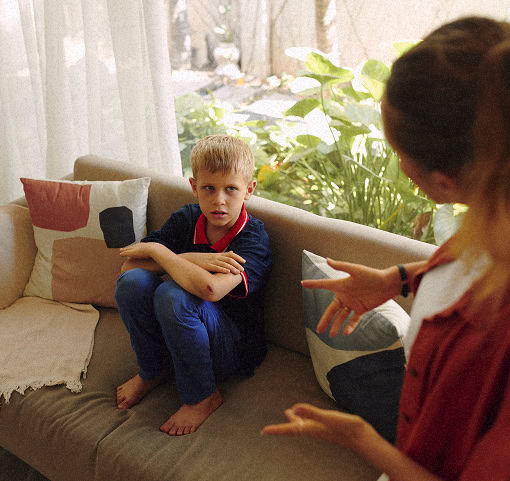

When parents reach out about communication
- Few or no words yet.
- Words at school but not at home, or the reverse.
- Frustration that boils over when they’re not understood.
- Pulling, pointing, or leading you by the hand as the main way of asking.
- A device or picture system that’s gathering dust.
What the work looks like at home
First we watch your child’s current communication, all of it, because reaching, whining, and bolting are all data. Then we pick the first messages that matter most in your house: help, more, all done, I need a break. We choose the mode your child can use today rather than the one anyone wishes they’d use, and we practice inside real moments: snack time, tablet time, the moment before the bath. You’ll learn to honor the new ask fast, every time, at first. Speed is what teaches it.
If your child uses an AAC device or picture system, we build with it, not around it. And nothing about this work discourages speech. For many kids, giving them any reliable channel lowers the frustration enough that words have room to show up.
Questions Parents Ask
No, and the research is comfortable on this one. Reliable communication in any mode tends to support speech, not replace it. Frustration is the enemy of talking, and this work removes frustration.
Often, yes. Having words and being able to use them under stress are different skills. A child who can label fifty animals but can’t ask for help mid-meltdown needs the asking, not more labels.
No, and it pairs well with it. A speech therapist works on speech and language itself. We work on behavior: making communication the easiest, most reliable tool your child has, so the hard moments shrink. Many families have both, and we’re glad to collaborate.
Usually the system wasn’t wrong, the setup was. If the picture is slower than the scream, the scream keeps winning. Getting the mechanics right is most of our job.
More of what we work on
Social Skills
Taking turns, reading the room, making and keeping friends. Practiced in real settings, because that’s where friendships actually happen.
Behavior Support
Aggression, bolting, transitions that run the house. Every behavior is doing a job for your child. We find the job, then teach a safer, easier way to get it done.
Executive Functioning
Routines, transitions, starting and finishing things. The skills that make school days and mornings work.
Daily Living Skills
Dressing, brushing teeth, washing hands, cleaning up. Everyday routines, taught step by step until your child can run them on their own.
Parent Collaboration
You’re part of every session, because the plan only works if it keeps working after I leave. Teaching you is part of the job.
Something else going on?
Most of what families bring me doesn’t fit neatly in a box, and the assessment is where we find out what actually helps.
Start with the interest form
Tell me a little about what’s going on. You’ll hear back from me, not an intake department, within 24 business hours.
Interest Form
Stay in the loop
Oak & Arrow will never share or sell your email.